
Canterbury's recent PSPOs were made by the wrong body, so fines under them are not valid. About £10,000 is at stake, plus two convictions. What happens next.
Canterbury City Council’s recent Public Spaces Protection Orders were never lawfully made. The council told its own members so at full council on Thursday 22 October.
Updated 5 November: the replacement orders are on the Overview Committee agenda for 5 November. See the new city centre order and the new dog control order.
The fines issued under them are not valid. Two people were convicted under them. Refunding the fines would cost about £10,000, the council’s legal team said, though that figure is not final.
Until new orders are made, the council cannot enforce the ones that have failed.
What went wrong
The monitoring officer, the council’s senior lawyer, published a formal report on 20 October. It is a Section 5 report under the Local Government and Housing Act 1989, which an officer must write when a council decision breaks the law. Councillors have to consider it within 21 days, so it went to the meeting as urgent business (full council webcast, 22 October 2026).
Introducing it, the monitoring officer told members:
“It has been established very recently that the making of a public spaces protection order, a PSPO, is an executive function. Unfortunately, the recent PSPOs made by this council were decided by full council. As the decision to create the PSPOs was not made by the body with the legal authority to do so, the PSPOs are unlawful.”
The mistake goes back to 2022, when the council moved from a committee system to a leader and cabinet system. When the constitution was rewritten, the council treated PSPOs as a “local choice” decision that full council could keep for itself. That way every councillor could debate and vote on orders that “can often be controversial”.
“I’m afraid this came down to an inaccurate interpretation of the legislation at the time,” the officer said. “It’s recognised as extremely disappointing and embarrassing. It was a genuine error and was meant with the best of intentions.”
A member of the legal team found the problem while starting a fresh order from scratch. The council then took a barrister’s opinion, which confirmed it.
“As PSPOs were not validly made, the enforcement outcomes are not valid,” the officer said. Littering fines are not affected, because they are enforced under separate law.
A breach of a PSPO carries a £100 fixed penalty in Canterbury, the council’s fixed penalty notice page says.
What the council says it will do
The report sets out these next steps:
- discharge the existing orders, which officers can do under powers they already hold
- make new orders the correct way, by a Cabinet decision after a debate at the Overview Committee, with some due “in the next few months”
- contact the people affected, and advise the two people convicted on how to appeal
- check every other “local choice” decision in the constitution
- decide whether to refund fines in full and whether to pay “a small amount of compensation”
Officers are still working out how many fines were issued. “If you were to refund the fines, it would be £10,000. The numbers are low,” the officer told members. “Appreciate that that’s not the main issue here. We got it wrong.”
Asked whether anything less than a full refund could expose the council to legal claims, the officer said: “I would need to take that away.”
On signs, the officer said those for orders being replaced soon could stay for now. For the orders “further away”, it would be “sensible to remove the signage so it’s not confusing”.
One councillor said the dog orders were due back in December.
A report to the Governance Committee
Cllr Alex Ricketts proposed that the monitoring officer report back on how the decision was made, how it is being put right and what other risks the council faces. Cllr Dan Watkins, who chairs the Governance Committee, backed the idea, and officers advised it should go to that committee rather than scrutiny.
Members voted for it unanimously. The report will cover the remedy, the costs, the ongoing risks, how future decisions are routed and a review of the other local choice functions. Any recommendations will come back to full council, which next meets on 14 January.
Cllr Naomi Smith asked how hard it would be for people to get their money back. She described an elderly woman fined £100 on the seafront over her dog. “She’s elderly, she won’t be able to fill in forms. Aren’t we just going to refund her the money?” she said. “We need to make it as easy as possible.”
The officer said there would be checks “to make sure we’ve got the right person”, and that the decision on full refunds was still open.
The council leader, Cllr Alan Baldock, said he had been “really annoyed” but praised the legal team. “Our legal team spotted it. It wasn’t reported to them,” he said. “They could have buried it. They could have hidden it.” He added: “Let’s just get on with it. Let’s face up to what we got to do and do it.”
“A systemic review”
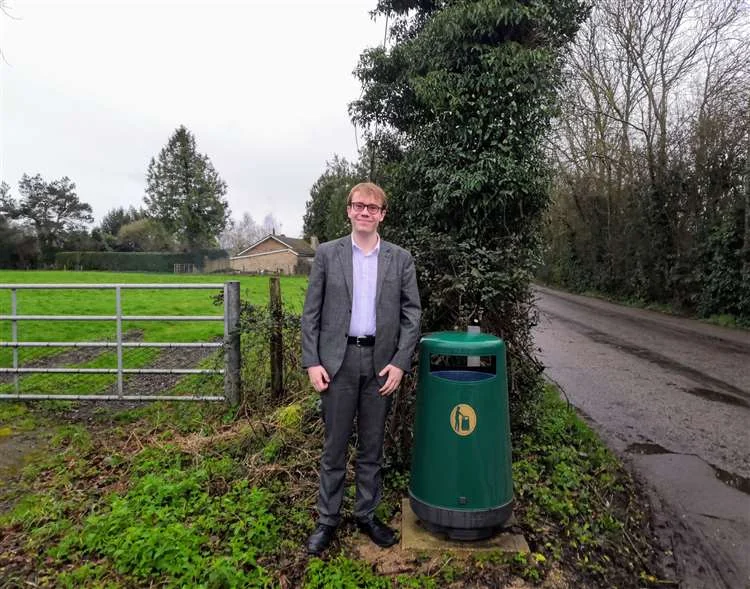
James Hodgkinson is vice chair of Upper Hardres Parish Council and chairs the Canterbury Area Committee of the Kent Association of Local Councils. He sent us his response in writing.
“The impact on local taxpayers could be significant,” he said. “Fines issued on the basis of faulty local legislation are estimated at £10,000, and it is likely these will need to be paid back in full.
“Yet the problem could run far deeper, especially in those cases which resulted in criminal convictions from breaches of now-defunct PSPOs. I am sure there will be calls for compensation and this could mean more unnecessary expense to the public purse.”
He is most concerned about the gap until new orders arrive. “What’s perhaps more annoying is that the district is now in an enforcement vacuum,” he said. “The PSPOs we have in place are legally unsound and can’t be enforced, and the new ones will take time to be constructed.”
He does not accept the leader’s view that the council should not look for someone to blame.
“Simply giving officers a pat on the back for identifying an error four years in the making is not enough,” he said. “Local residents and taxpayers deserve a systemic review into what went wrong, why mistakes were made, and who was responsible in order to rebuild the confidence of residents across our district.”
What it means for you
- If you paid a PSPO fine since 2022, the council says it will contact the people affected. It has not yet said whether every fine will be refunded in full, or how to claim.
- If you paid a littering fine, nothing changes: those are enforced under other law.
- PSPO signs for some orders may come down before the replacements are made.
- The new orders will be debated at the Overview Committee before Cabinet decides. We covered the consultations on the dog control order and the barbecue and fire ban.
The council has not yet published a list of which orders are affected. We will update this story when the Governance Committee report is published.
Have your say