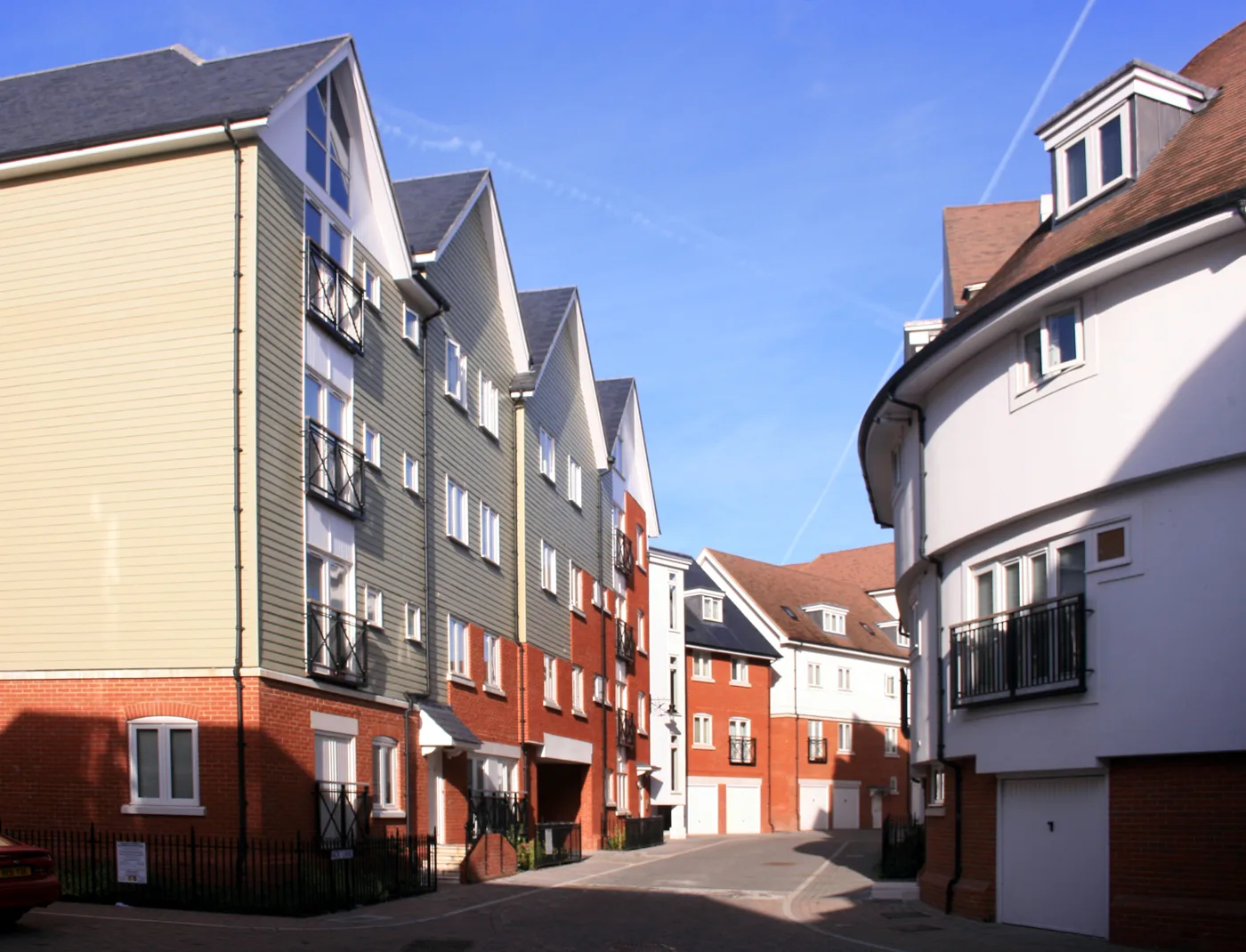

Canterbury City Council's own accounts show it has never spent the infrastructure share of its building levy. The pot reached £3,370,289 by March 2026.
Canterbury City Council has collected £3,370,289 from developers for infrastructure and has not yet spent a penny of it on a single project. Its own Infrastructure Funding Statement for 2025/26, published in July 2026, says so in one sentence: “No CIL money has yet been spent on strategic infrastructure projects. Canterbury City Council is in the process of setting up governance arrangements for how CIL receipts are allocated and spent.”
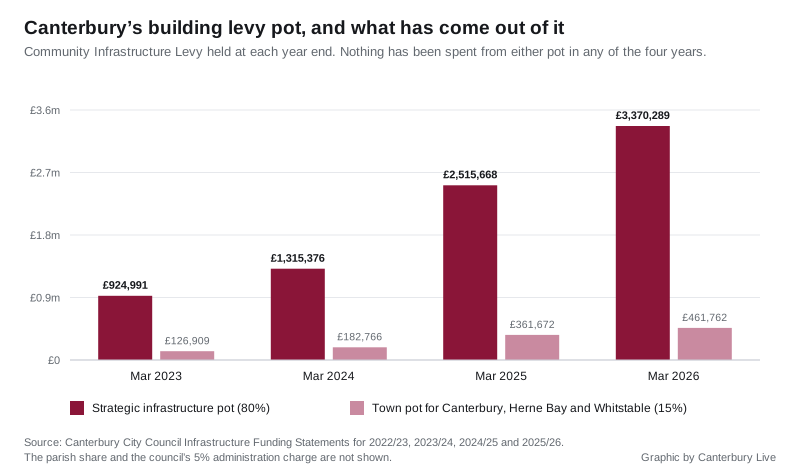
The council has printed a version of that sentence in every statement it has published since 2022/23. Over those four years the pot has grown by £2.4 million.
What the levy is, and where the money goes
The Community Infrastructure Levy is a charge per square metre on most new development in the district. Canterbury’s charging schedule was approved on 13 February 2020 and took effect on 1 April 2020. The council’s statements split every pound collected four ways:
- 80 per cent goes to a strategic infrastructure pot, for schools, roads, parks, GP surgeries and the like.
- 15 per cent is the “neighbourhood portion”, passed to the parish council where the development happened, rising to 25 per cent where the parish has a neighbourhood plan.
- In Canterbury, Herne Bay and Whitstable, which have no parish councils, at least 15 per cent “must be spent within the town where it was collected”, with the council deciding what on.
- 5 per cent covers the council’s own costs of running the levy.
Only the last of those has been spent reliably. In 2025/26 the council received £1,021,073 in levy money and spent £51,054, all of it on administration.
The pot, year by year
| Year end | Strategic pot (80%) | Town pot (15%, unparished) | Total CIL held |
|---|---|---|---|
| March 2023 | £924,991 | £126,909 | £1,069,360 |
| March 2024 | £1,315,376 | £182,766 | £1,498,142 |
| March 2025 | £2,515,668 | £361,672 | £2,880,140 |
| March 2026 | £3,370,289 | £461,762 | £3,875,648 |
The strategic column has a nil in the “spent” row of every one of those four statements. So does the town column. The only levy money that moves is the parish share, and the 2025/26 table shows £43,598 of it received and the same sum still held at the year end, because transfers are made in April and October rather than continuously.
The town money nobody has allocated
The £461,762 in the town pot is the part that should matter most in Canterbury, Herne Bay and Whitstable, because it is money the rules require to be spent in the town that generated it. The council’s statement says it “seeks to engage with communities in these urban areas to understand the spend priorities, for example, through gathering opinion in the Residents Surveys”.
Four statements on, the spent column for that pot still reads £0.00.
Parishes are in a different position. They get their share automatically, and can ask for it early to get a project moving. Blean, Chestfield and Littlebourne each filed a levy report to the council for 2025/26, published as appendices to the statement. The three towns have no parish council to receive anything or to report on it, which is part of why only one parish in the district has a finished neighbourhood plan and why most residents of the district have no body of their own to spend this money.
Section 106 is the bigger number
The levy is not the whole of the developer money the council holds. Its 2025/26 statement also reports £5,989,033 of unspent section 106 contributions, the site-by-site obligations negotiated on individual planning permissions.
Section 106 money does move. The council received £1,307,000 in 2025/26 and spent or transferred £1,461,000, more than it took in. The unspent s106 balance fell from £6,920,000 a year earlier.
Put together, the council was holding about £9.86 million of developer contributions at the end of March 2026.
Why the levy pot sits still
The council’s answer, in all four statements, is governance. The strategic pot is meant to fund projects identified in Part Two of its Infrastructure Delivery Plan, and the 2025/26 statement says that plan “will be updated in line with the adoption of the draft Local Plan”. The new Local Plan runs to 2040 and is not yet adopted.
So the money is waiting on a plan that is waiting on an examination. Meanwhile the balance rose by £854,621 in the last year alone.
What it means for you: if you have been told a new development will pay for a school place, a junction or a park, check which pot it comes from. Section 106 money is tied to a named obligation and is being spent. The levy is a general fund, and in Canterbury none of the infrastructure share has yet funded anything. Residents of Canterbury, Herne Bay and Whitstable have a direct interest in the town pot, because the rules say it has to be spent where it was raised, and the council says it works out how through its residents surveys.
The council publishes a statement every year, by the end of December, at how we report developer contributions. If you want to know what is planned for your street, our planning applications guide explains how to find and comment on a scheme.
Sources
- Canterbury City Council, Infrastructure Funding Statement 2025 to 2026 (PDF), sections 2 and 3, for the 2025/26 receipts, the £3,875,648 and £5,989,033 unspent balances, the four-way split, the £100 per dwelling cap and the quoted governance sentence.
- Canterbury City Council, Infrastructure funding statement 2024 to 2025 (PDF), for the March 2025 balances and the same governance wording.
- Canterbury City Council, Infrastructure funding statement 2023 to 2024 (PDF), for the March 2024 balances.
- Canterbury City Council, Infrastructure Funding Statement 2022 to 2023 (PDF), for the March 2023 balances.
- Canterbury City Council, Community Infrastructure Levy and its charging schedule of February 2020 (PDF), for how the charge is set.
Have your say