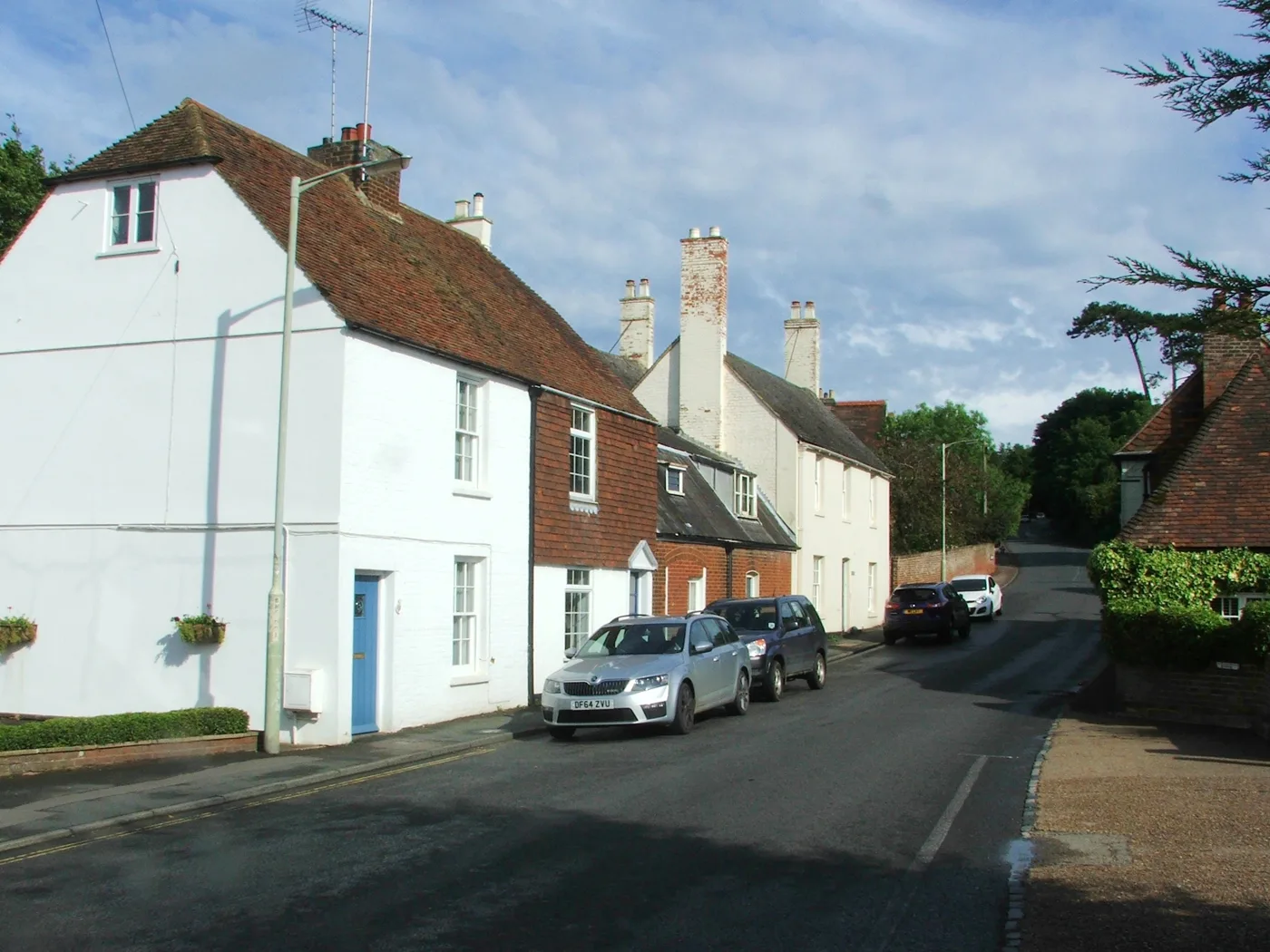

One adopted, two waiting on an examiner, three stalled and one abandoned: the record behind Canterbury's new neighbourhood planning toolkit.
Canterbury City Council has published a guide to help parish councils and community groups write their own neighbourhood plans. It went online on Monday 21 September. The council’s leader says such plans let communities “shape development in their area using their knowledge of what everyone locally needs”.
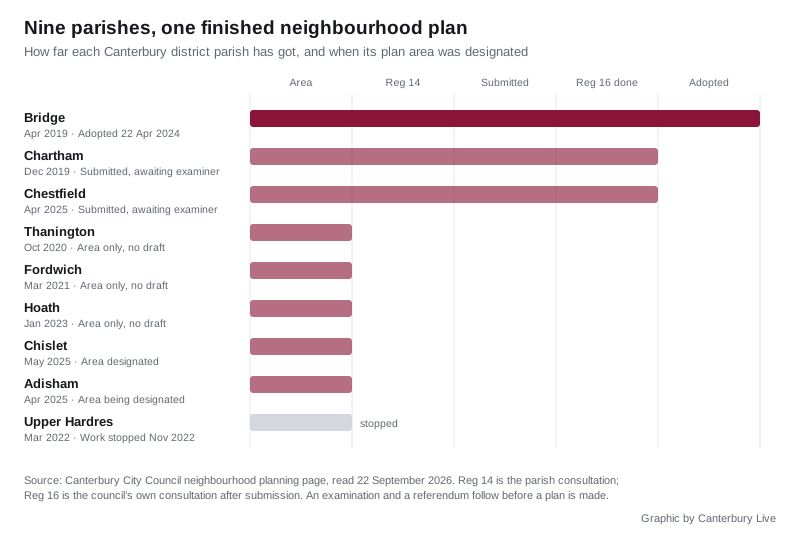
The council’s own planning pages show how hard that is in practice. In the district, one neighbourhood plan has been adopted. Two are waiting on an examiner. Three parishes have held a designated plan area for between three and six years without publishing a draft. One parish has given up.
Where each parish has got to
All of the following is from Canterbury City Council’s neighbourhood planning page, read on 22 September 2026.
| Parish | Area designated | Stage reached |
|---|---|---|
| Bridge | 17 April 2019 | Adopted 22 April 2024 |
| Chartham | 4 December 2019 | Submitted 23 December 2025, awaiting examination |
| Chestfield | 23 April 2025 | Submitted 10 March 2026, awaiting examination |
| Thanington | 5 October 2020 | Area only, no consultation yet |
| Fordwich | 4 March 2021 | Area only, no consultation yet |
| Hoath | 4 January 2023 | Area only, no consultation yet |
| Adisham | Applied April 2025 | Being designated |
| Chislet | Applied May 2025 | Designated |
| Upper Hardres | 24 March 2022 | Work stopped, November 2022 |
Bridge is the only parish with a plan in force. Its referendum was held on Thursday 28 March 2024. The vote was 398 in favour and 207 against, a 66 per cent yes. The council adopted the plan on 22 April 2024, five years after it designated the area.
Chestfield has moved faster than anyone. Its area was designated on 23 April 2025 and the plan was formally submitted on 10 March 2026, under eleven months later. The council consulted on it for eight weeks, from 16 April to 11 June 2026. An independent examination comes next, and the council’s page does not say when.
Chartham started six years earlier and is at the same point. Its area was designated in December 2019, its Regulation 14 consultation ran from 1 August to 7 October 2025, it was submitted on 23 December 2025, and the council’s own eight-week consultation closed on 31 March 2026. Almost six months on, the page still says only that “the consultation will be followed by an independent examination”.
The parish that stopped, and why
Upper Hardres Parish Council had its neighbourhood plan area confirmed on 24 March 2022 and abandoned the work eight months later. The council quotes the parish’s own minutes of 15 November 2022 for the reason: “a Neighbourhood Plan must include sites for development and local resistance to this led to reduced support”.
That is the part the launch does not dwell on. A neighbourhood plan cannot block growth. The council’s own toolkit is blunt about it: “Your plan should not contradict the strategic policies in the Local Plan or prevent housing developments allocated in the Local Plan.” A plan must also pass the “basic conditions”, one of which is being in general conformity with the strategic policies of the district’s Local Plan. A parish that wants a plan mainly in order to stop houses being built will find it cannot have one.
What a plan is actually worth in cash
The council leader, Cllr Alan Baldock, said a neighbourhood plan “allows communities to access sources of money like the Community Infrastructure Levy”. The council’s Infrastructure Funding Statement for 2025/26 sets out what that means:
- A parish gets 15 per cent of the levy collected from development in its area.
- That rises to 25 per cent where a neighbourhood plan is in place.
- Without a plan there is an annual cap of £100 per existing dwelling in the parish. With a plan, the cap goes.
- Money is transferred in October and April, and a parish can ask for it early to get a project moving.
For a small parish the cap bites. A village of 400 homes can receive no more than £40,000 a year without a plan, however much is built there. With one, it takes a quarter of everything with no ceiling.
Most of the district cannot do this at all
Canterbury, Herne Bay and Whitstable have no parish or town councils. There is no qualifying body to lead a plan, so residents of the three places where most of the district lives would first have to set up a neighbourhood forum.
The same gap shows up in the money. The council’s 2025/26 statement says that in those unparished areas “at least 15% of CIL must be spent within the town where it was collected”, with the council deciding what on, informed by its residents surveys. Its figures show £461,761.66 of that town money held at the end of March 2026 and nothing spent during the year. We have looked at the wider picture in a separate report on the council’s unspent levy.
A flow chart that does not follow the regulations
The toolkit itself runs to 98 pages, and its advice on evidence, engagement and whether a plan is the right tool at all is straightforward. The file is dated May 2026, four months before the council published it.
Its “Neighbourhood plan process” diagram, on pages 6 and 7, does not match the statutory sequence:
- The Submission plan step is described as “subject to a majority ‘yes’ vote, the Neighbourhood plan is made”. That describes the referendum and the making of the plan, both of which come later.
- The Making the plan step repeats, word for word, the description given three steps earlier for Revisions: “the revision of the draft plan, prepare the statutory documents”.
- The chart leaves out the council’s own Regulation 16 consultation, the publicity stage the district runs once a plan is submitted. It is the stage both Chartham and Chestfield have just been through, and in each case it ran for eight weeks.
The correct order, and the one the council has followed for Chartham and Chestfield, is: Regulation 14 consultation by the parish, submission under Regulation 15, Regulation 16 publicity by the council, independent examination, referendum, then making.
What it means for you: if your parish is thinking about a plan, read the toolkit for the engagement and evidence chapters, and take the running order from the council’s record of what Chartham and Chestfield actually did. If you live in Canterbury, Herne Bay or Whitstable, a neighbourhood plan is not available through a parish council, because you do not have one. The council’s planning team takes calls on 01227 862 178.
Sources
- Canterbury City Council, neighbourhood planning, read 22 September 2026, for every designation date, stage, the Bridge referendum result and the Upper Hardres minute.
- Canterbury City Council, Neighbourhood Planning Toolkit (PDF, dated May 2026), for the process diagram on pages 6 and 7.
- Canterbury Newsroom, Toolkit designed to help parishes and passionate neighbours shape their areas, 21 September 2026, for the quotations from Cllr Alan Baldock and Cllr Alan Atkinson.
- Canterbury City Council, Infrastructure Funding Statement 2025 to 2026 (PDF), paragraphs 3.9, 3.10 and 3.13, for the 15 and 25 per cent shares, the £100 per dwelling cap and the unparished-area rule.
Have your say