
Chestfield's electorate would go from 2,766 to 8,369 in a merger with Swalecliffe its parish council did not ask for. Stage 2 dates are not yet set.
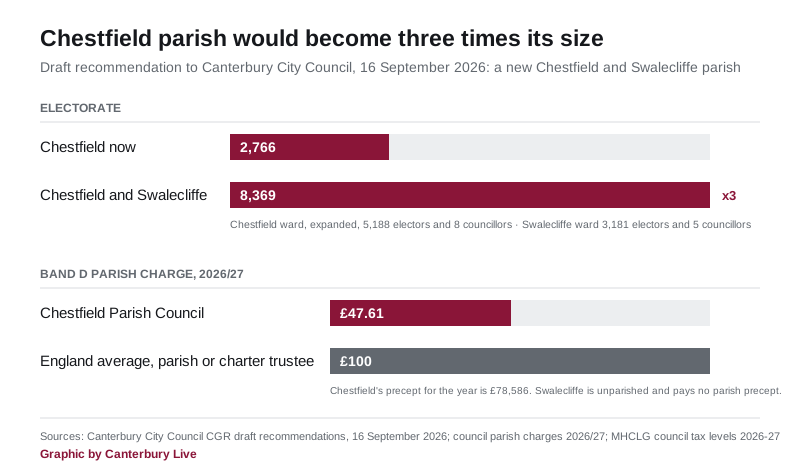
Canterbury’s community governance review went to two meetings at the Guildhall on Wednesday 16 September, and the single biggest change in it is one that has had almost no attention: Chestfield parish would be merged with the unparished area of Swalecliffe, and its electorate would go from 2,766 to 8,369.
That is three times the size. The figures are in the council’s own 74-page draft recommendations report, which puts the expanded Chestfield ward at 5,188 electors with eight councillors and a new Swalecliffe ward at 3,181 electors with five.
The proposal did not come from Chestfield Parish Council. The report records nine consultation responses for Chestfield, in which the parish council raised the Brooklands and Bodkin developments straddling its boundary. The merger with Swalecliffe was the cross-party councillor working group’s own idea, on the grounds that the two communities have “similar local needs and identities” and “associate closely together already”.
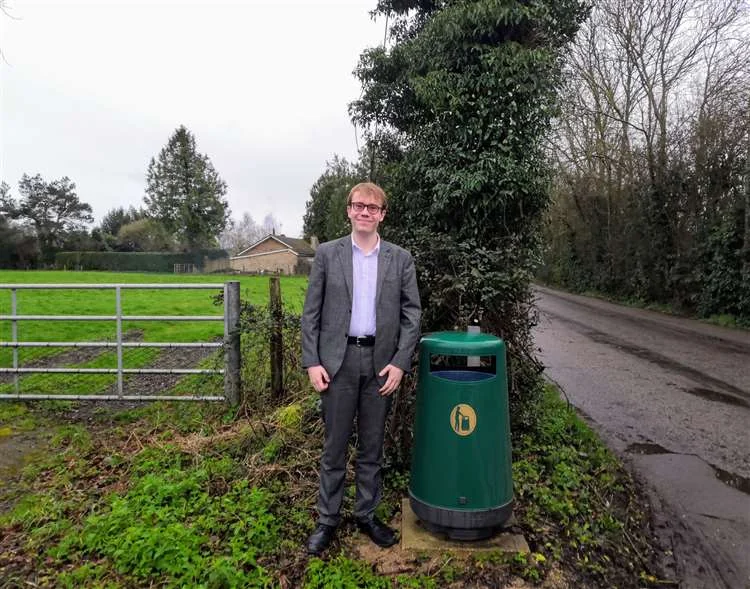
James Hodgkinson, chairman of the Kent Association of Local Councils Canterbury Area Committee and vice chair of Upper Hardres Parish Council, spoke at the General Purposes Committee that night and has given us his figures and his response in writing.
“Chestfield is one of Canterbury’s most effective parish councils,” he said. “Its neighbourhood plan is progressing at pace, it delivers quarterly magazines to every residence, and it hosts regular community events. Importantly, it does all of that on a precept that is 53% below the national average. It’s the sort of parish council that we should be praising and celebrating, not looking to take back to square one.
“The proposals being consulted on for Chestfield would see the parish’s electorate expand from 2,766 to 8,369 (about 300%), and spell the end of Chestfield Parish as we know it today. This is a change that the parish council has not asked for, and does not support.”
The precept arithmetic
Chestfield’s parish precept for 2026/27 is £78,586, which works out at £47.61 on a Band D bill (Canterbury City Council). The government’s figure for this year is that “the average Band D precept charged by a parish or charter trustee for 2026-27 will be £100” (MHCLG, council tax levels 2026 to 2027). Chestfield’s charge is 52% below that, which is close to the figure Hodgkinson gives.
The rest of his Chestfield claims check out against the record. The parish magazine goes to “all households in Chestfield (over 1400 properties)” four times a year, in the first week of March, June, September and December, delivered by resident volunteers (Chestfield Parish Council). The neighbourhood plan was submitted to the city council on 10 March 2026, its consultation closed on 11 June 2026 and it is now waiting on an independent examiner (Canterbury City Council).
The point he makes next is the one that has no obvious answer in the report. Chestfield residents have paid a precept for decades. Swalecliffe residents have not.
“If the merger of the currently parished Chestfield with the unparished area of Swalecliffe were to happen as is proposed in the Stage 2 consultation, it would lead to difficult questions with regard to finances,” he said. “While Chestfield residents have been ‘paying in’ to their parish council for decades through their precept, those in Swalecliffe have not. But if the two areas were to be merged, all of Chestfield’s assets would be transferred to the combined council. While it has been suggested that arrangements could be made to ringfence Chestfield funds for Chestfield residents, it is hardly the start that a new council, set up to govern a new, larger geographical area, would want.”
What councillors were actually asked to agree
The resolution put to Full Council on 16 September runs to five points, and the published recommendations set them out in full. Shortened, they are:
- That no parish is created for the unparished area of Canterbury at present, that Charter Trustees are installed instead, and that the review continues with a recommendation of no change in Canterbury itself.
- That the draft recommendations be approved, launching the second round of public consultation.
- That parish and town councils be consulted on deferring their elections from 2027 to 2028, with recommendations back to Council on 14 January 2027.
- That the review’s terms of reference be amended to bring completion forward to 1 March 2027, with special meetings arranged for the purpose.
- That the Leader be invited to write to the Secretary of State urging the government to establish a clear mechanism by which a review for the Canterbury city area can be completed as soon as practically possible, “including the creation of a parish council if supported by residents”, while preserving city status, the Lord Mayoralty and associated civic traditions.
The fifth point is new and was not in the material we reported on 10 September. It amounts to the council asking the government to reopen the door it has just closed on a Canterbury town council. Any changes agreed would take effect on 1 April 2028.
We cannot report the vote from the public record, because there is not one yet. No minutes have been published for either the General Purposes Committee or the Council meeting that followed it, no decision notice has appeared on the council’s decisions register, and the council has issued no statement since: its newsroom has published nothing on the review since 8 September. Hodgkinson, who was in the room, says both votes carried and the review has moved to Stage 2, and everything he told us is written on that basis.
The webcasts are the only public record of the night. His speech is at 15 minutes 15 seconds on the committee stream.
The timing argument
The government paused the whole local government reorganisation programme on 7 September and put Kent’s decision under review (letter to council leaders). No date has been given for the outcome. The council pressed on with the review nine days later.
“It is clear to me that the City Council’s reason for holding the Community Governance Review was Local Government Reorganisation,” Hodgkinson said. “Their own press release ran with that as its headline, and the agenda pack put before General Purposes Committee on Wednesday mentioned ‘LGR’ at least 20 times. Considering we have no certainty over if, or even when LGR will take place, continuing with a CGR on this basis seems to me distinctly premature.”
Both parts of that are checkable. The council launched the review under the headline “Council shake-up set to spark review of democracy in the district” on 14 April 2026, and quoted the chair of the working group saying Canterbury City Council and Kent County Council “are expected to be abolished in the coming two years” (Canterbury City Council). We counted the abbreviation LGR 20 times in the 74-page report alone, with a further four uses of “local government reorganisation” written out in full.
His second point is about what happens to all of this if reorganisation never arrives.
“With LGR paused, there is little clarity over if, when, or in what form it might resume,” he said. “The danger now is that moves taken now to mitigate the democratic deficits it could cause may become obsolete. Take Whitstable as a case in point. 55% of consultation responses supporting the creation of new town councils cited local government reorganisation as a reason for the change. Considering Whitstable had its last town council consultation just two years ago, it seems that there is little justification for proceeding to stage two of the consultation until we have absolute certainty on the future of Canterbury City Council and the representation gaps its abolition could leave.”
The Whitstable numbers in the report are these. Of 165 responses, 68 (41%) supported a parish or town council and 90 (55%) were opposed. Among the supporters, the largest theme by some distance, put at roughly 41 responses, was local voice and representation, and the report describes those residents as concerned that “upcoming local government reorganisation or a shift toward a larger unitary authority will leave local people remote from decision-makers”. The largest theme among opponents, roughly 62 responses, was financial burden and uncapped precepts.
The previous Whitstable review is a matter of record too: that consultation ran from 5 January to 1 March 2024, and the town decided against a town council (Canterbury City Council). Thirty-four respondents this time said the consultation was ignoring that decision.
Not everything in it is contested
Hodgkinson is not against the review as a whole, and said so plainly.
“In the main, the proposals brought to stage 2 of the consultation make sense,” he said. “Boundary changes, groupings, and mergers all have the potential to support more effective and convenient local governance, and are worthy of support. Importantly, most of the proposals progressing to stage 2 feel as though they have been developed in consultation with local people and their parish representatives, as they should be.
“Now the proposals have progressed to stage 2, it is important for all involved in local democracy to get out and engage with residents. It’s the only way to ensure that the City Council delivers the best proposals for the communities they serve, and parish councillors across the District stand ready to support this endeavour.”
One thing to be clear about: he is speaking as chairman of the KALC Canterbury Area Committee in his own right, not for its member councils. The committee has not met since the decision to move to Stage 2 and has taken no collective position on the review.
What it means for you
Nothing on your council tax bill changes this year, and nothing at all changes until 1 April 2028 at the earliest. Our guide to council tax bands stands as published.
The dates for the second consultation have not been set. “Dates for the Stage 2 Consultation are yet to be set out by the City Council, but it’s anticipated these will be determined soon,” Hodgkinson said. “Affected households should also receive targeted outreach from the Council, informing them of proposed changes and actively seeking their views. If anyone is in any doubt about whether changes are proposed for their area, they should contact either their parish council if they are in an area served by a local council, or their City Councillor.”
That matches the report, which says leaflets go to households where the proposals would materially change local governance, and that the final recommendations “will be based on the responses from local people far more acutely than the Draft Recommendations can”.
If you live in Chestfield, the proposal would put you in a parish three times the present size, sharing a council and its assets with Swalecliffe, with eight of the 13 councillors elected from Chestfield. If you live in Swalecliffe, you would gain a parish council and start paying a precept that is not capped. If you live in the unparished part of Canterbury, you would pay a Charter Trustee precept instead of getting a town council, which we costed at 4p to 20p a week on 10 September. Our report on the abolition plan and what the pause changed has the background.
A separate eight-week consultation on moving parish and town council elections from May 2027 to May 2028 is due to report back to Council on 14 January 2027. Final recommendations are due in March 2027.
We will publish the Stage 2 dates and the consultation link as soon as the council sets them.
Update, 29 September 2026: the council has now opened both consultations.
- Stage 2 of the review closes at 9am on Thursday 17 December 2026. You can respond through the council’s online survey, by email to consultations@canterbury.gov.uk, or by post to the Policy Team, Canterbury City Council, 14 Rose Lane, Canterbury CT1 2UR. The council’s consultation page has the proposals and a paper form.
- Drop-in sessions, all 6pm to 7.30pm: online on Microsoft Teams on Wednesday 14 October; The Whitstable School, Bellevue Road, on Wednesday 11 November; and Herne Bay Baptist Church, High Street, on Thursday 12 November.
- Moving parish and town council elections from May 2027 to May 2028: this separate consultation closes at 9am on Thursday 19 November 2026. The council says a delay would let substantial boundary changes take effect in 2028, rather than waiting until 2031.
Have your say