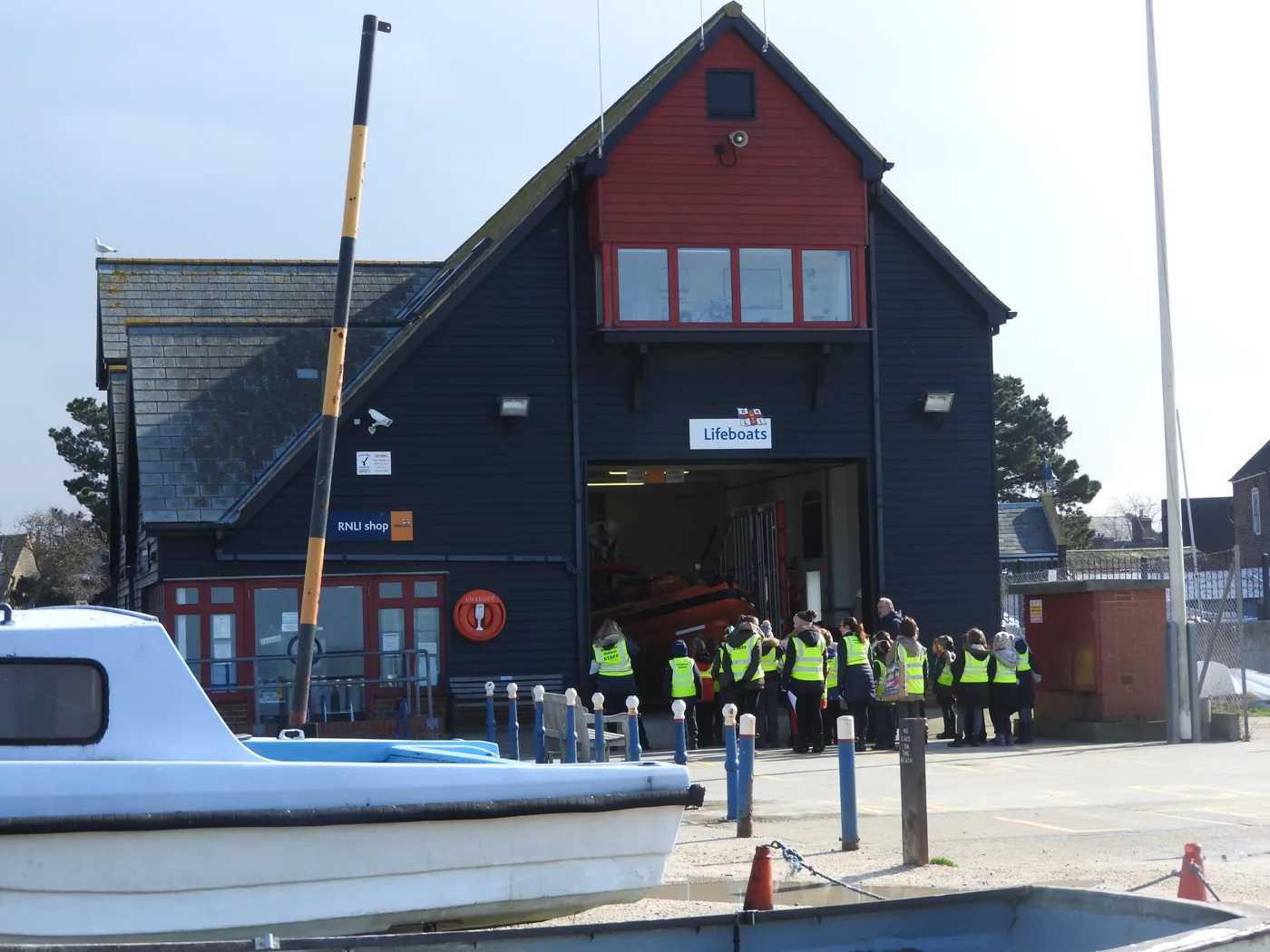

Emily Francis and Liam Masters have passed out as launch vehicle operators at Whitstable RNLI, driving the tractor that puts the lifeboat into the sea.
Two volunteers at Whitstable lifeboat station have qualified to drive the machine that gets the lifeboat into the water. Emily Francis and Liam Masters have passed out as launch vehicle operators on the station’s Talus MB-4H launching tractor, the RNLI announced on 8 September (RNLI news release).
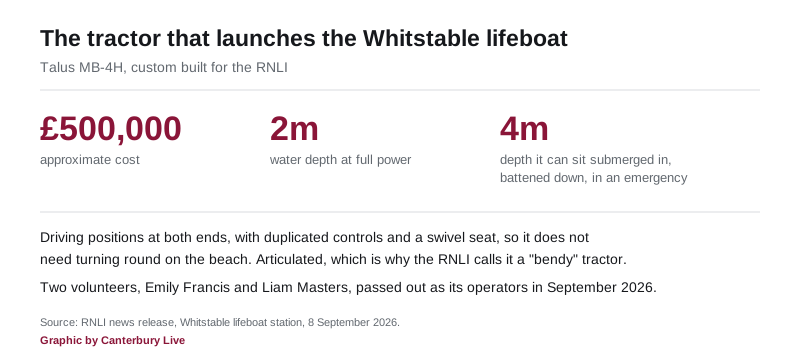
The tractor costs around £500,000. It is custom built for the RNLI, and it is designed to work in conditions that would stop an ordinary vehicle.
What the job involves
Emily Francis, who is 33 and works as a student fees officer at Canterbury Christ Church University, said her husband Sam Turner joined the station when they moved to the area, “and I commented that the only job I would like to do at the station was to be the tractor driver”.
Her training started about a year ago. “It involved lots of driving up and down the beach learning how to handle such a large piece of equipment in the various tide and weather conditions that can be encountered when launching the lifeboat, and how to get out of trouble if the tractor and the lifeboat launching carriage got stuck.”
All of her training so far has been at the station itself. She thanked her fellow volunteers for getting her through it and said she is looking forward to further exercises at RNLI headquarters in Poole.
Liam Masters, 36, is a conductor for Southeastern. He saw a social media post asking for tractor drivers and thought “I could probably do that, applied and got accepted”. He had already trained to drive an HGV, so “it seemed like a natural progression to drive a large and expensive tractor”.
He completed the four-day launch vehicle operator course at Poole, which involved driving around obstacles to demonstrate the tractor’s manoeuvring abilities. As he put it, the training centre was inland, “so I never saw the sea”.
He has since launched the lifeboat three times on actual services.
The tractor
The Talus MB-4H is what the RNLI calls a “bendy” tractor, articulated so it can manoeuvre a lifeboat and its carriage across shifting beach and shoreline. The RNLI says it can operate at full power in water up to two metres deep, and in an emergency can be battened down and left submerged in up to four metres.
It has driving positions at both ends, with duplicated controls and a swivel seat, so the operator can drive it down the beach and back up again without turning it round.
What it means for you
Whitstable lifeboat station is crewed by volunteers, and the tractor drivers are part of that crew rather than a separate paid role. Both of the new operators have full-time jobs elsewhere.
If you are on the beach when a launch is happening, the practical point is the one the training exists for: the tractor and carriage are moving a heavy boat through shallow water at speed, and the driver’s view is not what you would assume from looking at it. Keep clear of the slipway and the beach either side of it when the station is launching.
More about the station, and about volunteering there, is on the RNLI’s Whitstable page.
Sources
- Emily and Liam Pass Out as the latest Tractor Drivers at Whitstable RNLI (RNLI, 8 September 2026)
Have your say