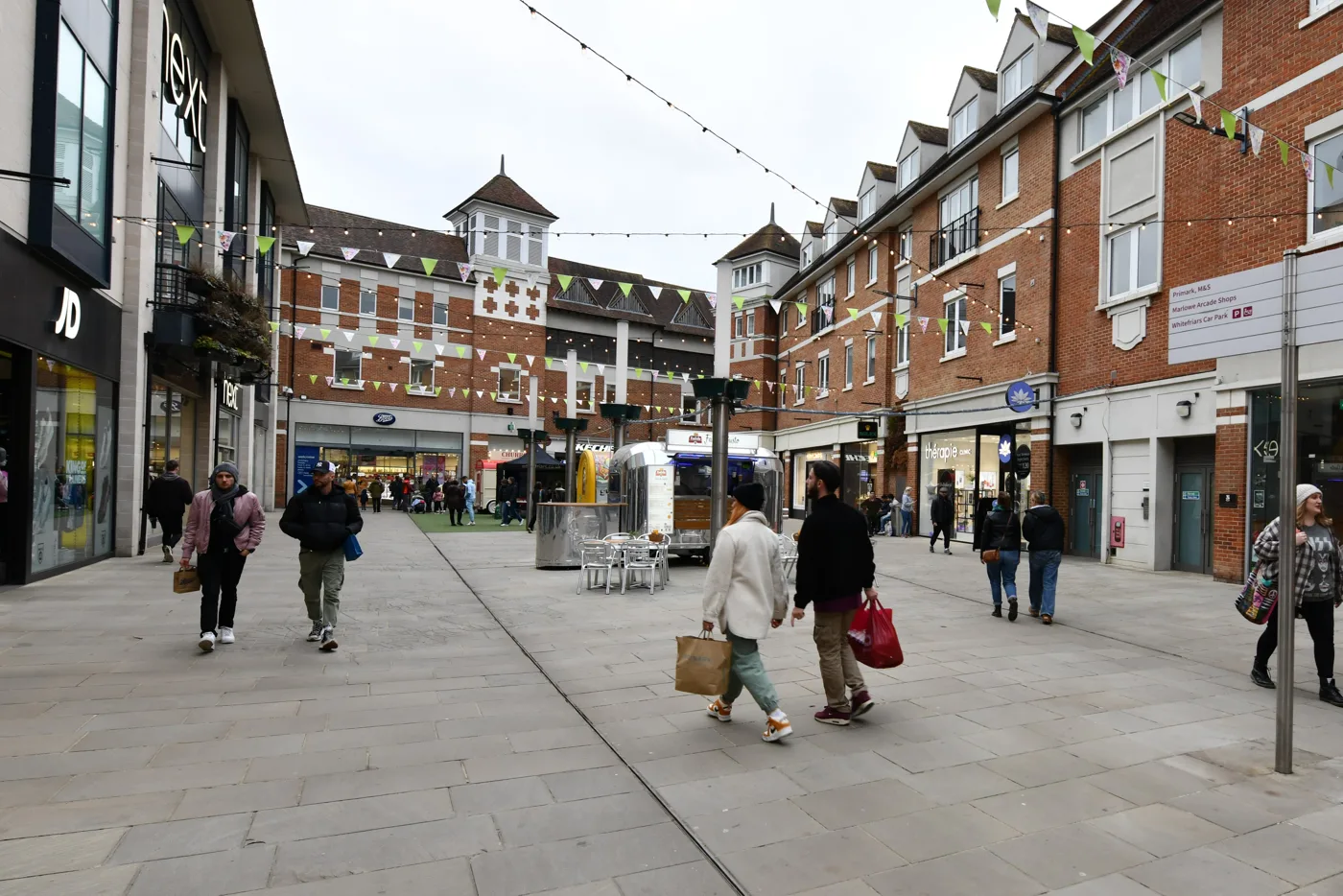

Four 4G and 5G small cells are live at Clocktower Square and Whitefriars in Canterbury. Only O2 customers benefit, and no coverage figures are published.
Four small mobile transmitters have been installed on street furniture in Canterbury city centre, in the Clocktower Square and Whitefriars areas. They carry 4G and 5G, and only O2 customers will notice a difference.
The units were fitted by Freshwave, an infrastructure company working on behalf of O2 under an agreement with Kent County Council, which owns the street assets they are attached to (Freshwave, 8 September 2026).
What an outdoor small cell actually is
It is a box roughly the size of a small parcel, bolted to something that is already there, usually a lamp post. It does not replace a mast. It adds capacity in a specific busy spot, taking load off the larger macro network so that phones in a crowded street do not have to compete for the same signal.
That is the reason the two named locations are what they are. Clocktower Square and Whitefriars are where a lot of people stand still with a phone in their hand at the same time.
Freshwave describes the effect as customers having “an improved experience and faster speeds”. No before-and-after coverage or speed figures have been published, so there is no independent measure of what changes.
The Kent County Council side of it
Kent County Council is not paying for this. It is granting access to its street assets under what is called an open access agreement, which is non-exclusive: the council can strike the same deal with other mobile operators, and it keeps control of the assets themselves.
David Wimble, the county council’s Cabinet Member for Economic Development and Special Projects, said the authority welcomed “the investment from O2 and collaboration with Freshwave”, and that “by working with our partners to make suitable council assets available, we’re helping to bring better mobile coverage and faster, more reliable connections to the places where people need them most”.
Freshwave says it has signed more than 40 such agreements with local authorities and deployed more than 800 small cells across the UK.
What it means for you
If you are on O2, or on a network that uses O2’s masts, you may find your phone works better around Clocktower Square and Whitefriars than it did. If you are on EE, Vodafone or Three, nothing has changed for you. Neither company has said whether other operators will follow in Canterbury, and the open access agreement allows it without requiring it.
Three things are not on the record and are worth knowing are missing:
- exactly which lamp posts or street columns the four units are on
- what the coverage was before, and what it is now
- whether any further sites in the district, including Whitstable and Herne Bay, are planned
We have not seen a Canterbury City Council role in this. The agreement is with Kent County Council as the highway authority, and small cells of this kind on existing street assets do not normally go through the planning applications process the way a mast would.
Sources
- Freshwave and O2 enhance mobile connectivity in Canterbury with outdoor small cells (Freshwave, 8 September 2026), carrying quotes from Kent County Council, Freshwave and O2
Have your say